Trading Bot vs Automation Platform: Key Differences for Traders
Understanding the distinction between a trading bot vs automation platform is crucial for traders. This guide explains how bots handle narrow tasks while platforms support complete trading workflows, risk management, and disciplined execution.
By Troy Swartwood, Founder & Software Engineer · Published 2026-05-11 · Updated 2026-06-23
Trading Bot vs Automation Platform: Understanding Automated Trading Tools
trading bot vs automation platform is an important distinction for retail day traders who want to automate execution without losing control over strategy, risk management, and discipline. As retail day trading evolves, so do the tools available to traders. From simple scripts to sophisticated systems, technology offers various ways to execute strategies and manage trades. While both aim to assist traders, they operate on different scales and offer distinct capabilities. Recognizing these differences is key to aligning the right tool with your trading goals and risk management philosophy.
What is a Trading Bot?
A trading bot, in its most common interpretation, is typically a standalone piece of software or a script designed to execute a specific, often singular, trading strategy automatically. These bots are usually pre-programmed with a set of rules, such as buying when a certain indicator crosses another, or selling after a fixed profit target is hit. They are often focused on a narrow range of market conditions or a particular asset class.
Characteristics of Trading Bots:
- Specific Functionality: Often designed for one particular strategy (e.g., arbitrage, simple trend following, or mean reversion).
- Limited Customization: May offer some parameter adjustments, but extensive modification of the underlying logic can be challenging or impossible without coding knowledge.
- Standalone Operation: Can sometimes operate independently, connecting directly to a broker's API.
- Simplicity: Generally easier to set up for a specific task, appealing to those looking for a quick solution to automate a single idea.
While a trading bot can automate repetitive tasks and remove some emotional bias, its scope is often confined. It might lack comprehensive risk management features beyond basic stop-loss orders, and adapting to changing market conditions can be difficult without manual intervention or reprogramming.
What is a Trading Automation Platform?
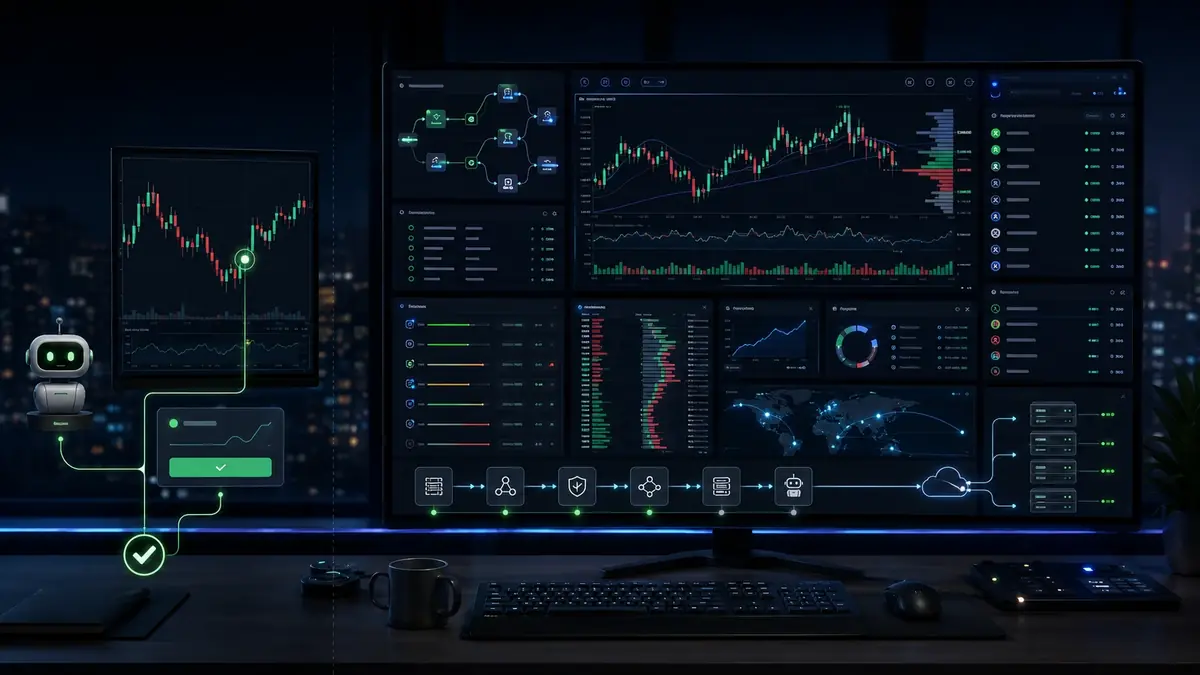
A trading automation platform, such as XeanVI, offers a far more expansive and integrated environment for building, testing, and executing complex trading workflows. Instead of just automating a single strategy, these platforms provide a framework where traders can design and orchestrate multiple strategies, manage risk across their portfolio, and maintain discipline through structured execution.
Key Features of Trading Automation Platforms:
- Workflow Design: Allows traders to build intricate trading workflows, combining multiple conditions, entry/exit rules, and playbooks. This can include advanced order types like bracket orders, or strategies based on indicators like VWAP or Opening Range Breakout (ORB).
- Comprehensive Risk Management: Integrates robust risk controls directly into the automation. This can include position sizing, daily loss limits, maximum drawdown controls, and dynamic stop-loss adjustments.
- Customization and Flexibility: Offers extensive options for customizing strategies without necessarily requiring deep coding skills. Traders can often define their own conditions, alerts, and execution sequences.
- Integration Capabilities: Designed to integrate seamlessly with various brokerage accounts, providing a centralized hub for managing trades across different platforms.
- Discipline and Consistency: By automating the execution of a well-defined plan, platforms help enforce trading discipline, ensuring that rules are followed consistently, free from emotional interference.
- Performance Monitoring: Provides tools for tracking performance, analyzing results, and iterating on strategies in a controlled environment, often including paper trading capabilities.
The core difference lies in the breadth and depth of control. A platform empowers traders to construct a holistic trading system, rather than just deploying an isolated automated action. It's about building a disciplined framework for execution, not just a single 'buy' or 'sell' trigger.
Trading Bot vs. Automation Platform: A Direct Comparison
To summarize the distinctions:
- Scope: A bot is typically narrow and task-specific; a platform is broad and workflow-oriented.
- Flexibility: Bots have limited adaptability; platforms offer extensive customization and dynamic strategy adjustments.
- Risk Management: Bots often have basic risk controls; platforms integrate advanced, comprehensive risk management features.
- Complexity: Bots are simpler to deploy for a single idea; platforms allow for the creation and management of complex, multi-faceted trading systems.
- Discipline: While both can reduce emotional trading, platforms are designed to enforce a complete, disciplined trading playbook.
"The true power of automation in trading isn't just about speed, but about the consistent, disciplined execution of a well-defined strategy, free from the biases of the moment."
Choosing the Right Tool for Your Trading Journey
For retail day traders, understanding whether a simple trading bot or a comprehensive trading automation platform aligns better with their needs is crucial. If your goal is to automate a very specific, unchanging rule, a bot might suffice. However, if you aim to build a robust, adaptable, and disciplined trading system that incorporates advanced risk management and complex strategies, an automation platform offers the necessary tools and flexibility.
Ultimately, both tools are designed to assist traders, but a trading automation platform provides a more complete ecosystem for developing and executing a disciplined approach to the markets. It empowers traders to define their strategies, manage their risk, and maintain consistency, which are all vital components of navigating the complexities of day trading. Explore how XeanVI's features can help you build and execute your disciplined trading workflows.
Educational source: For broader context on day trading rules and risks, review FINRA's day trading investor education resource.