What is the 3 5 7 rule in trading?
The 3-5-7 rule is a risk management framework designed to help day traders limit potential losses and maintain capital. Learn how this rule works and how automation can support disciplined trading.
By Troy Swartwood, Founder & Software Engineer · Published 2026-05-21 · Updated 2026-06-23
What is the 3-5-7 Rule in Trading?
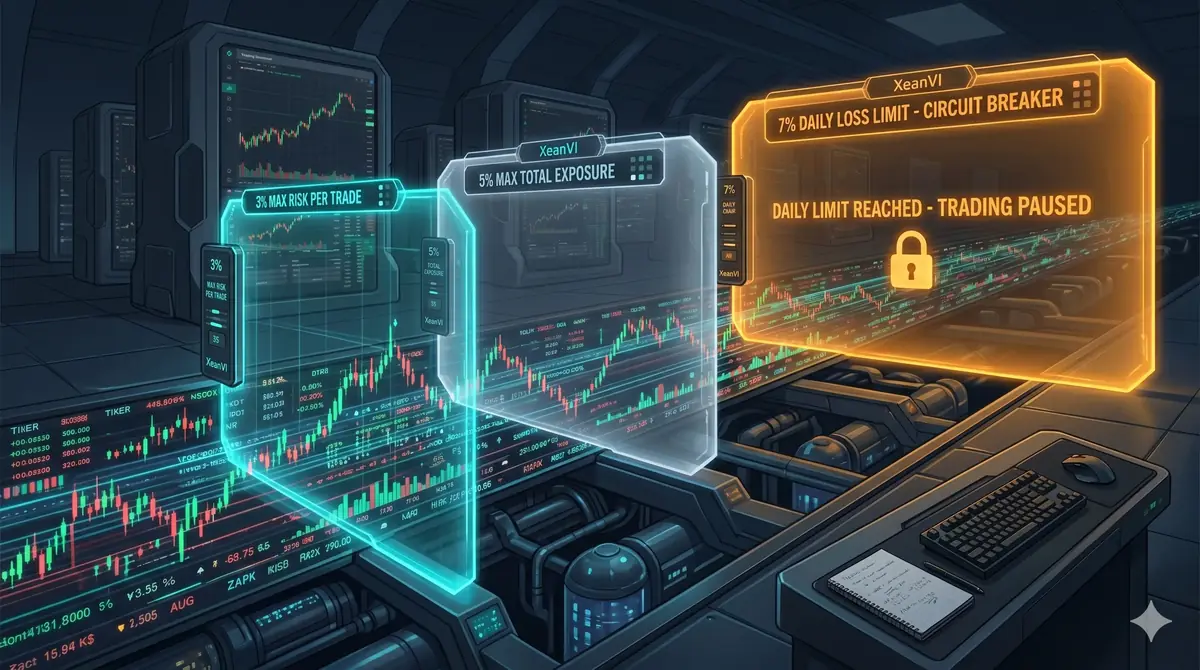
The 3-5-7 rule in trading is a simple risk management framework that helps day traders control losses before emotions take over. Instead of making risk decisions in the middle of a fast-moving trade, this guideline sets clear limits for how much capital can be risked on one trade, across open positions, and during a single trading day.
Day trading can be intense. Quick decisions, volatility, and pressure can push traders into emotional choices. A structured risk framework gives traders boundaries before the market opens, helping protect capital and prevent one bad session from becoming a major setback.
How the 3-5-7 Risk Framework Works
The 3% Rule: Limit Risk Per Trade
The first part suggests that a trader should not risk more than 3% of total trading capital on any single trade. For example, if you have a $10,000 trading account, your maximum planned loss on one trade should not exceed $300.
This limit is usually controlled through position sizing and stop-loss placement. The purpose is simple: one losing trade should not damage the account badly enough to prevent the trader from continuing with the strategy.
The 5% Rule: Control Total Exposure
The second part focuses on overall exposure. It recommends that the combined risk across all open positions should not exceed 5% of total trading capital at one time.
This matters because multiple trades can be connected without the trader realizing it. If several positions move against you at once, total account risk can increase quickly. A 5% exposure limit helps prevent over-leveraging and keeps losses contained during broader market weakness.
The 7% Rule: Set a Daily Loss Limit
The final part creates a daily circuit breaker. If losses reach 7% of trading capital in one day, the trader stops trading for the rest of that session.
This rule is designed to prevent revenge trading. After a rough start, many traders try to win the money back immediately. That usually leads to bigger mistakes. A daily stop forces the trader to step away, reassess, and return with a clear mind.
Why This Rule Matters for Day Traders
A disciplined risk structure can help traders avoid some of the most common account-killing mistakes:
- Emotional decisions: Predefined limits reduce panic, hesitation, and hope-based trading.
- Large account drawdowns: Risk caps help prevent one trade or one session from causing major damage.
- Overexposure: Total position limits keep traders from stacking too much risk at once.
- Inconsistent execution: Clear rules make it easier to follow the same process every day.
The Hard Part: Following the Rules in Real Time
The concept is easy. The execution is where most traders fail.
During a live market session, calculating risk percentages, adjusting stop levels, watching multiple positions, and controlling emotion can become difficult. A trader may know the correct rule but still ignore it after a loss, during a breakout, or while trying to recover from a bad entry.
You don’t have to do the math manually. XeanVI’s dashboard can help track exposure and keep downside controls built into the trading workflow.
This is where automation can be useful. Automated trading systems do not hesitate, chase, or revenge trade. When risk parameters are defined ahead of time, the system can follow them consistently.
Using Automation to Enforce Trading Discipline
XeanVI is designed to help traders build structured trading workflows with predefined rules. Instead of manually calculating every risk decision during live price movement, traders can define risk controls before entering a trade.
For example, bracket orders can include a stop-loss and take-profit target at the time of entry. That helps ensure the trade has a defined exit plan from the beginning. Exposure monitoring can also help keep total risk within a planned range, while daily loss limits can act as a safety stop when the session goes against the trader.
Explore our features to see how automated safeguards can support a more disciplined trading process.
Risk Management Is Not a Profit Guarantee
No risk rule guarantees profits. It cannot predict price action, prevent every loss, or replace a real trading strategy.
Its value is protection. A trader who controls downside risk has a better chance of staying in the game long enough to improve. Good risk management works with strategy, market analysis, paper trading, and continuous review.
Before using real capital, traders should test their approach in a simulated environment. Paper trading allows you to evaluate entries, exits, stop placement, and exposure limits without putting money at risk. You can learn more about trading strategy development in our blog.
Final Takeaway
The 3-5-7 risk model gives day traders a practical structure for limiting losses. It controls risk on individual trades, across open positions, and during the trading day.
The biggest benefit is not the numbers themselves. The benefit is discipline. When traders define limits before the market moves, they are less likely to make emotional decisions under pressure.
Stop letting emotions control your risk. Launch an aggressive day trading strategy with automated guardrails that help keep losses limited by design. Start with XeanVI today.
Educational source: For broader context on day trading rules and risks, review FINRA's day trading investor education resource.