Best Algorithmic Trading Software for Beginners
Selecting the best algorithmic trading software for beginners isn't about chasing black-box prediction bots. It's about finding reliable tools that enforce trading discipline and execute your rules.
By Troy Swartwood, Founder & Software Engineer · Published 2026-08-17
Why Beginners Fall for Automated Trading Myths
Most new traders searching for the best algorithmic trading software for beginners assume automated tools print cash while they sleep. You plug in a bot, fire up a script, and watch money accumulate. That's not how live markets operate. Software executes rules without emotion; it doesn't foresee unexpected news events or cure a flawed trading strategy.
Stop guessing. Have you ever coded a setup only to override your own stops during a sudden market panic? It happens all the time. We've watched traders spend three weekends building a clean breakout strategy, then abandon it by Tuesday because two losing trades in a row felt unbearable. The software wasn't the problem. The discipline was. When retail traders compare automated platforms, they often fall for marketing hype instead of focusing on execution discipline. You can read our guide on what to look for before using AI trading bots to see why rules matter far more than prediction models.
There's a second myth worth naming: that automation requires a computer science degree. It doesn't. Plenty of beginners run simple, rule-based setups with no custom code at all. The barrier isn't technical skill. It's the willingness to write down exact rules and follow them when real money is moving.
Are You Searching for Profit Guarantees or Execution Discipline?
No software guarantees winning trades. Markets shift constantly, and strategy performance changes across different volatility regimes. A breakout system that worked in a trending market can bleed capital sideways for months when volatility compresses. What software actually offers is structure. It strips away human hesitation, late entries, and panic exits.
Rule enforcement is where most traders fail.
If you don't control risk, automated execution just loses money faster. That's why evaluating algorithmic tools requires focusing on order management, safety filters, and execution speed rather than promotional performance claims. Ask a vendor how their platform handles a rejected order or a partial fill, and you'll learn more than any backtest chart can tell you. You might also want to understand why execution matters more than raw buy or sell signals when trading live markets.
How to Choose the Best Algorithmic Trading Software for Beginners
Beginners need clear guardrails. You don't need complex neural networks to automate basic technical setups like an Opening Range Breakout (ORB) or a VWAP pull-back. What you need is a platform that won't let one bad morning wipe out a month of careful gains.
Look for these four capabilities when assessing beginner software:
- Paper trading options to practice without risking live capital
- Direct broker connectivity supporting automatic bracket orders, so your stop and target go out with the entry instead of trailing behind it
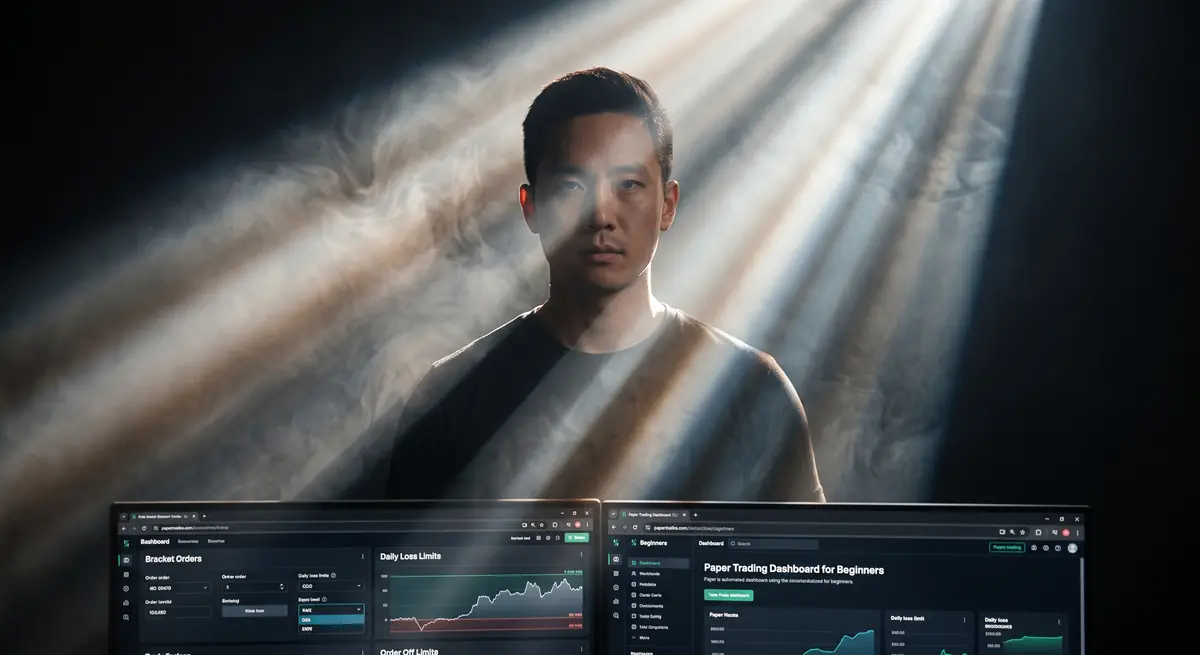
- Daily loss limits that halt trading when a drawdown threshold is hit
- Clear strategy logic, whether through python scripts or custom playbooks
A bad fill can turn a green setup into a red trade instantly. Slippage happens during market volatility or on low-volume equities where bid-ask spreads widen sharply. Many beginners pick software based on backtest curves without considering how real-time broker execution operates.
Take the morning of August 5, 2024. The VIX spiked above 60 in pre-market as global markets sold off, and the S&P 500 opened down roughly 3%. Spreads that normally sit at a penny or two on liquid names widened to 15 or 20 cents in the opening minutes. A trader sending a plain market order for 500 shares at 9:30 could easily fill 30 cents worse than the last quoted price, turning a planned $150 risk into something closer to $300 before the trade even started working. That's why bracket orders and limit-based entries matter more on volatile opens than any signal ever will.
You want a tool that sends bracket orders directly to your broker through established execution pipelines. Without automatic stop-loss placement, manual intervention creates unnecessary friction. Automation keeps your original risk parameters intact even when panic sets in.
Building Your Systematic Rules
You need a defined plan before picking any platform. A systematic approach means knowing your entry trigger, exact position size, profit target, and exit signal long before the market opens. Write it down. If your rules only exist in your head, they'll bend the first time a trade goes against you.
Check out our playbook features to understand how structured trading plans function in practice. If you like coding your own python scripts, exploring an Alpaca broker integration might give you direct API access. If you prefer comparing structured platforms against alert scanners, look at our breakdown of XeanVI vs Trade Ideas to see how execution automation differs from standard market scanning.
Execution discipline means taking only the setups that meet your exact parameters and cutting losses without hesitation, no matter how the last trade felt.
Pay close attention to market context, too. Trading low float stocks requires different risk controls than trading large-cap equities due to sudden liquidity changes. A 1,000-share position in a stock with a 3 million share float behaves nothing like the same position in a mega-cap. If you aren't familiar with market structure terms, read our guide on what float means in day trading before committing capital to automated strategies.
Step-by-Step Starter Blueprint
Ready to try automated setups? Don't start by deploying live money on day one.
- Draft your strategy rules on paper with precise entry and exit parameters.
- Test your logic using historical market data and forward paper trading. Give it at least 20 trades before judging anything, since small samples lie.
- Set strict daily risk caps that automatically lock trading if hit.
- Connect your execution engine to a broker using micro-position sizes first. One share is fine. You're testing the pipeline, not the profit.
Keep your expectations grounded. Software won't turn a bad strategy into a good one, but it will keep a good strategy disciplined. Most beginners who stick with automation say the biggest change isn't better returns in month one (it rarely is). It's that they finally know why each trade happened.
Common Questions About Algorithmic Trading Software
Is algorithmic trading good for beginners?
It can be, provided you treat it as a discipline tool rather than a shortcut. Beginners who define clear rules, paper trade first, and cap daily losses tend to get real value from automation. Beginners hunting for a hands-off income stream usually don't.
How much money do you need to start algorithmic trading?
Less than most people think. Paper trading costs nothing, and many brokers support fractional or single-share orders for live testing. The real requirement is time: expect several weeks of testing before risking meaningful capital.
Can you lose money with automated trading software?
Yes. Automation executes your rules faithfully, including flawed ones. If your strategy loses money manually, it will lose money automatically, just faster and more consistently. Risk caps and stop-loss automation limit the damage; they don't eliminate it.
Do trading bots actually work?
They work at what they're built for: executing predefined rules without hesitation or emotion. They don't predict the future, and no legitimate platform claims otherwise. The traders who benefit most are the ones with a tested strategy who struggle to follow it manually.
What's the difference between a trading bot and algorithmic trading software?
The terms overlap, but "bot" usually describes a packaged strategy someone else built, while algorithmic trading software describes a platform where you define and automate your own rules. For beginners, the second option teaches far more, because you understand every rule the system enforces.
Key Takeaways
- Automation enforces rules; it doesn't invent profitable ones.
- Prioritize bracket orders, daily loss limits, and paper trading over any performance claim.
- Slippage on volatile opens can double your planned risk, so limit-based entries matter.
- Test with historical data, then paper trades, then micro positions, in that order.
- Written rules beat remembered rules. Every time.
Start small, verify each step, and let the software do the one thing it does better than you: follow the plan.