Day Trading Doesn't Need Your Eyeballs on Charts All Day
The myth that day trading requires constant eyeballs on charts is quietly burning traders out. Discover why manual analysis breaks down under pressure, how the anxiety of an open position erodes discipline, and how automated day trading lets you set your rules and step away from the screen.
By Troy Swartwood, Founder & Software Engineer · Published 2026-06-01 · Updated 2026-06-23
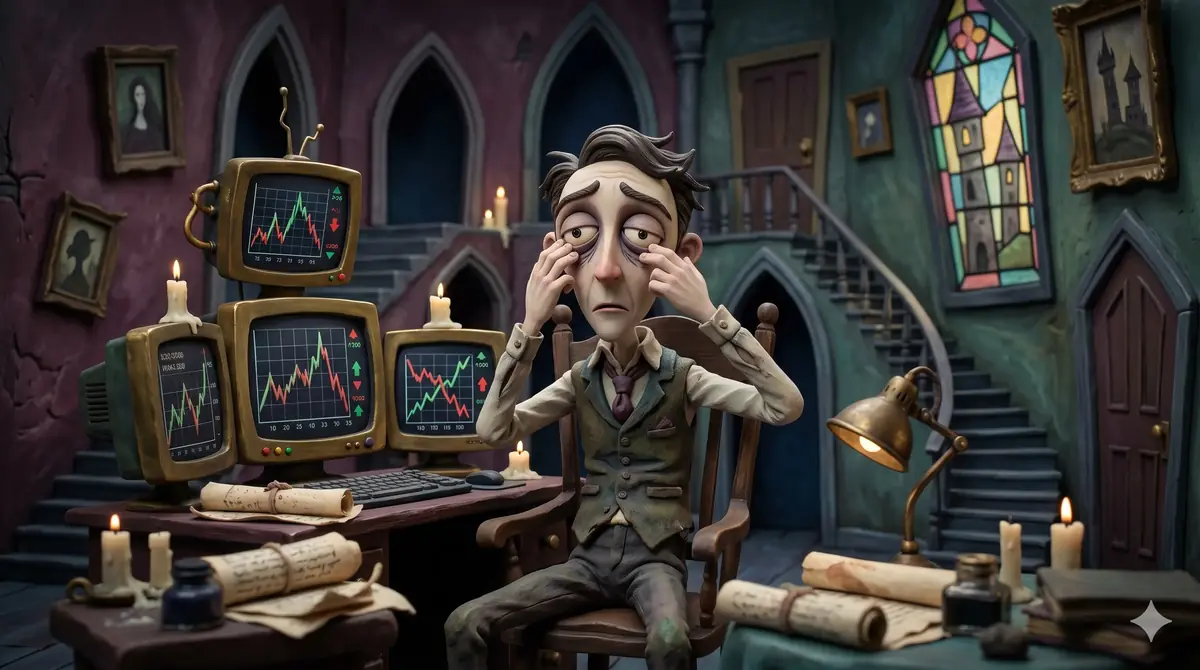
Day trading carries a stubborn myth: that your eyeballs must stay locked on a wall of monitors from the opening bell to the close. After years working alongside active traders and the automated systems they rely on, we've watched this belief quietly drain people of their time, focus, and judgment. The truth is more practical. Day trading rewards a clear set of rules and disciplined execution far more than it rewards raw screen time. Your eyeballs are not a trading edge. They are a liability waiting to misfire.
This piece pulls apart the screen fatigue in trading that so many traders accept as the cost of doing business, and shows why a smarter day trader routine starts with stepping back, not leaning in.
The Hard Limit on How Many Charts Human Eyeballs Can Actually Track
Attention is finite. A day trader running analysis across six charts at once isn't analyzing six charts well; they're skimming all of them poorly. Cognitive research on attention is blunt on this point, and the trading desk proves it daily. Once you exceed the handful of inputs a person can genuinely process, the analysis degrades into guesswork dressed up as vigilance.
The obvious mistakes follow. A missed exit because your eyeballs were on the wrong tab. A fat-finger entry during a fast move. These aren't failures of effort. They're the predictable result of asking human attention to do machine work.
When Analysis Breaks Down Under Pressure
Calm analysis and live-market analysis are different skills. In a quiet moment you might map a clean plan. The instant real money sits in a position, that same plan competes with adrenaline, and the analysis you trusted gets overwritten by impulse. People don't lose to the market as often as they lose to their own reaction to it.
The Anxiety of a Position You Can't Stop Watching
Here is the pain point few platforms address honestly. People enter a position, and then they're trapped. The trade is live, the rules are set, yet they can't pull their eyeballs away. Every tick becomes a referendum on the decision. This is screen fatigue in trading at its most corrosive, because it isn't just tiring, it actively pushes traders to override their own plan.
The frustrating part is obvious to anyone who has lived it: the watching changes nothing about the outcome, but it erodes everything about the trader.
Manual Day Trader Routine vs. Automated Execution
Compare what these two days actually demand of a person:
The manual day trader routine:
- Eyeballs glued to multiple monitors from pre-market through close
- Manual analysis under time pressure, with fatigue compounding by the hour
- Emotional entries and panicked exits as anxiety builds around each open position
- Burnout, skipped meals, and decisions made by an exhausted brain late in the session
The automated day trading approach:
- Rules and conditions defined once, in a calm state, away from live pressure
- A server that executes the plan without flinching, blinking, or second-guessing
- No emotional drift, because the system doesn't feel the position the way people do
- Reclaimed time and attention for strategy, life, and rest
If you're building a structured plan from scratch, our guide to building your first trading playbook walks through how to turn loose intentions into concrete rules.
How Automated Day Trading Reclaims a Trader's Time
This is where Xeanvi fits. Xeanvi exists to shift the heavy lifting off your eyeballs and onto a tireless server. You define your strategy, set your conditions and risk parameters, and let the platform handle execution while you step away from the screen.
Automated day trading doesn't promise easy outcomes, and it isn't a shortcut around the work of building a sound strategy. What it does is remove the human bottleneck. The rules you define in a clear-headed moment get executed the same way every time, free from the screen fatigue that warps manual analysis. You can explore how this works inside our playbook system, see how to put one together in our step-by-step playbook builder, and review exactly how the platform operates on our transparency page.
For a deeper look at the mechanics of automation, our breakdown of whether AI can automate stock trading covers what these systems can and cannot do.
What Can Go Wrong: A Sober Look at the Risks
Automation removes the burden of constant watching, but it does not remove risk, and pretending otherwise would do you a disservice. A poorly designed rule set can execute losing trades just as reliably as winning ones. Technical issues, connectivity gaps, or unexpected market conditions can all affect how a system behaves. A strategy that looked sound in calm conditions may struggle when volatility spikes. Automation also creates a different kind of complacency: walking away is the goal, but you still need to monitor performance, review results, and adjust your rules over time. The machine executes your logic faithfully, which means flawed logic gets executed faithfully too.
This is why testing matters. Before committing real capital, consider paper trading your strategy to see how it behaves without financial exposure, and never risk more than you can afford to lose. The Financial Industry Regulatory Authority maintains educational resources on the risks of day trading that every active trader should read.
What Automation Will Not Do
Let's be clear, because trustworthiness demands it. Automation cannot promise a specific outcome. Trading carries real risk, and you can lose money regardless of how disciplined your system is. Xeanvi removes the burden of constant screen watching; it does not remove market risk, and no responsible platform would claim otherwise.
Trade by Your Rules, Not by Your Eyeballs
The screen time myth persists because staring at charts feels like working. But effort spent watching is not the same as edge. The day traders who last are the ones who build a clear process and trust their execution enough to look away. Reclaim your attention, protect your judgment from burnout, and let a system do what systems do best. Learn more across the rest of the Xeanvi blog.
Disclaimer: This content is for educational purposes only and does not constitute financial advice. Trading involves substantial risk of loss and is not suitable for every investor. Consider paper trading any strategy before committing real capital, practice disciplined risk management, and never invest money you cannot afford to lose. Past performance does not guarantee future results.